

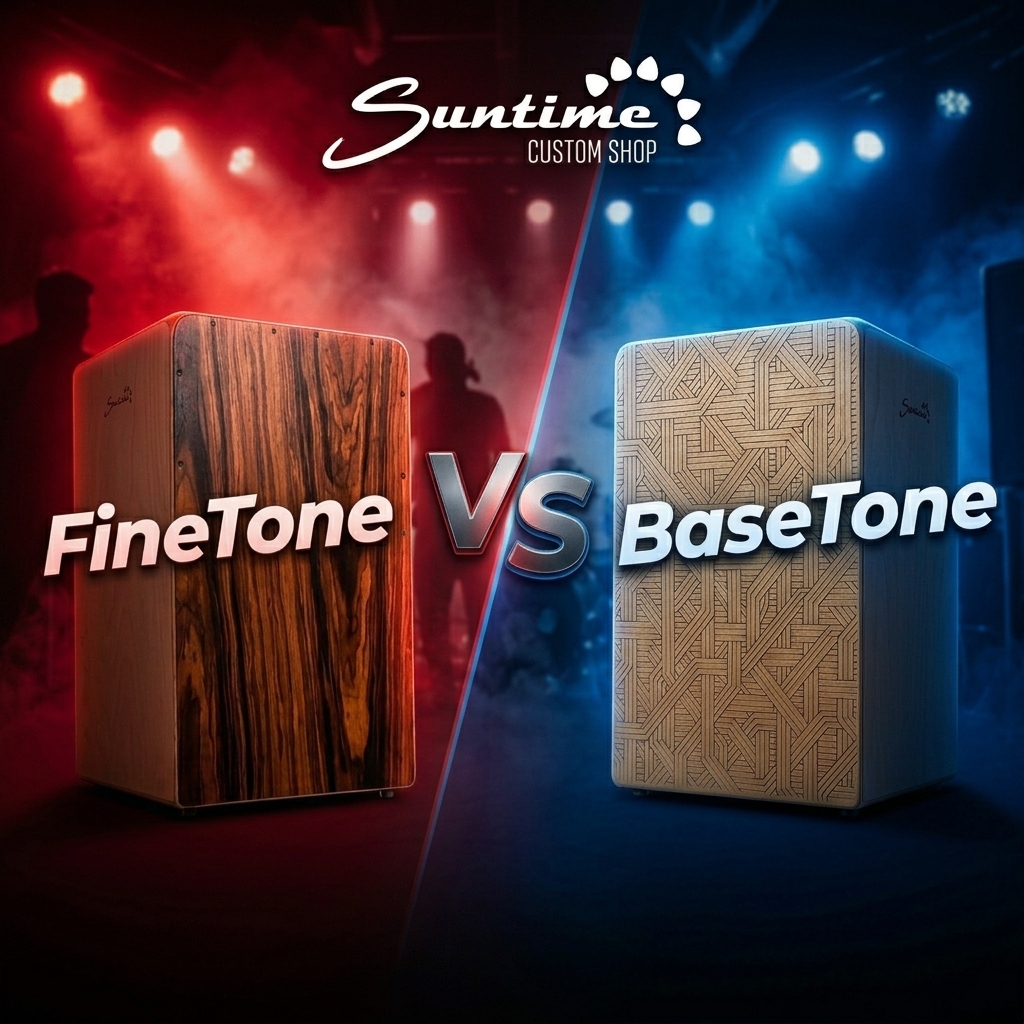
At first glance at the model Base Tone and Fine Tone They may seem almost identical—true «brothers» in the world of percussion. However, behind their similar silhouettes lie two different approaches to sound: one for those who value stability, and the other for those who love experimentation.
External differences and design
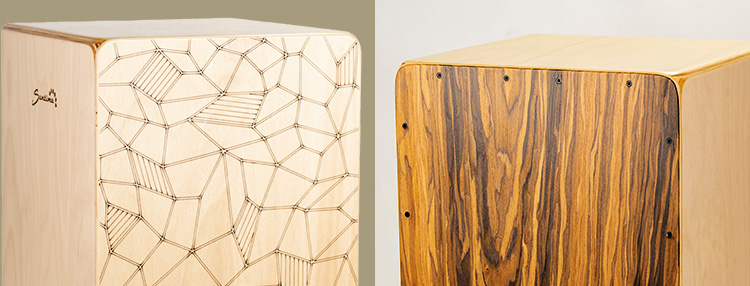
Although the bodies of both instruments are very similar, the front panel (tapa) immediately gives away the character of the model:
- Base Tone has a laconic laser engraving on the tapa.
- Fine Tone It is distinguished by its natural veneer finish.
Another important detail is the presence of self-tapping screws in the upper part Fine Tone, while in Base Tone The tapa is glued in place.
Tuning and Sound Philosophy
The main difference between the models is the ability to influence the timbre of the instrument.
1. Tapa settings In the model Base Tone The tapa is set at the optimum resonance level during production. This is ideal for musicians who want a ready-made, high-quality sound "out of the box". Fine Tone offers more freedom: thanks to the self-tapping screws in the upper part, you can adjust the tension of the tapa. Loosening the fasteners makes the attack softer and the sound more open, while tightening it provides a clear and fast response.

2. Spring mechanism (Snare) This is a key difference that often becomes decisive when choosing.
- У Base Tone The spring is fixed in place. Its sound is pre-set by the craftsmen and does not require user intervention.
- У Fine Tone The sound hole provides access to the adjustment mechanism. You can adjust the sound from a light rustle to a rich snare effect for modern acoustic music. What's more, the spring can be completely disconnected, transforming the instrument into a classic Peruvian cajon.

Analogy for better understanding
For comparison, you can imagine two cars: Base Tone — this is a car with a perfectly balanced factory suspension, where you just sit down and enjoy the ride. Fine Tone — this is the same high-quality car, but with the ability to adapt all parameters to your own driving style.
Equipment and conclusion
Both tools come with a branded case. However, buyers Fine Tone receive an additional bonus — a set of "multi-clap" sounds, which further expands the palette of sounds.

What to choose?
- Choose Base Tone, if you need a reliable instrument with a stable, professionally balanced sound without unnecessary hassle.
- Choose Fine Tone, if you work in different musical styles, like to control every detail of the sound and are keen on experiments.
Regardless of your choice, both models are designed to keep the music you create at the center of everything.
Link to video on the topic at Youtube